
How do you ensure you’re choosing the right IT support provider? The key lies in asking essential questions to uncover their expertise and fit for your business, with a focus on key questions that are central to the evaluation process. This guide will walk you through these crucial questions, helping you assess everything from their industry experience to their pricing transparency, as well as how to evaluate managed IT services and select the right managed service provider for your business. Ready to make an informed choice? Read on.
Key Takeaways
- Understanding your business needs and aligning them with the IT provider’s capabilities is crucial for protecting your business’s security, as well as enhancing efficiency, productivity, and ultimately supporting your business’s success.
- Assess the IT provider’s technical expertise, including certifications and relationships with vendors, to ensure effective management of your IT systems.
- Evaluate service level agreements, transparency in pricing, and client satisfaction metrics to choose a reliable provider that can support your business’s growth and adaptability, and to gain the value of a strong services partner.
Understanding Your Business Needs

Understanding your business needs is essential before addressing technical details. Key points include:
- Clearly articulating business goals.
- Identifying existing issues, strengths, and weaknesses in your IT infrastructure.
- Conducting a thorough discovery process to evaluate your IT environments and highlight areas for improvement.
- Including detailed questions about your business goals and technology objectives to ensure alignment.
Choosing an IT provider that understands your business needs is crucial. It is important to select an IT partner who acts as a strategic partner, not just a vendor, by offering tailored solutions and collaborating on informed technology decisions that support your long-term goals. For businesses seeking comprehensive and proactive IT management, selecting a managed it services provider ensures you benefit from expert experience, robust security measures, and ongoing strategic guidance.
They should enhance:
- Efficiency
- Productivity
- Security
- Scalability
- Support
These factors drive your business forward and ensure long-term success.
Here are some essential questions to ask to help assess a potential provider for IT support and potential providers.
What Is Your Experience in Our Industry?
An IT provider with experience in your industry is invaluable. They can quickly address common challenges and provide effective solutions, enhancing customer satisfaction. Their experience ensures they understand your unique challenges and can tailor their services accordingly. When considering options, it’s crucial to assess whether a potential managed service provider has demonstrated experience in your specific industry and offers on site support .
A dedicated account manager who monitors usage patterns and conducts quarterly reviews can further optimize service utilization.
How Do You Handle IT Support Requests?
Efficient handling of IT support requests minimizes downtime and maintains productivity. A clear process for addressing urgent IT issues and support tickets is crucial.
An effective escalation process resolves complex issues promptly, improving client satisfaction. Understanding how a provider handles desk and help desk support provides insight into their reliability and responsiveness.
Can You Provide Both Remote and Onsite Support?
Versatility in support options is essential. An IT support provider should offer both remote management and on site support for comprehensive issue resolution. Remote troubleshooting for minor issues and onsite support for complex problems supports reliable support as needed.
This flexibility reduces business disruption and keeps operations running smoothly.
Evaluating Technical Expertise

Assessing your IT provider’s technical expertise ensures effective management of your IT systems. This includes:
- Understanding their engineers’ experience with various technologies and infrastructure types.
- Looking for industry-recognized certifications that indicate technical capabilities and a commitment to high standards.
- Ensuring advanced IT and data security knowledge.
- Confirming a willingness to stay current with evolving threats.
Evaluating technical expertise goes beyond basic qualifications. It involves understanding their operational maturity and processes for staying current with technological advancements and vendor relationships. These factors ensure your IT environment is managed efficiently and securely.
What Certifications Do Your Engineers Hold?
Certifications like:
- CISSP
- CompTIA Security+
- AWS Certified Cloud Practitioner are crucial for IT professionals. They demonstrate technical proficiency and commitment to industry standards. Continuous education through certifications keeps engineers knowledgeable in the rapidly evolving technology landscape.
IT providers engage in continuous education and attend industry conferences to stay updated on emerging technologies and best practices.
How Do You Stay Updated with Technological Advancements?
Proactive IT management includes:
- Proactive monitoring
- Maintenance
- Patch management
- Software updates
- Security protocols
Continuous learning is essential for IT service providers to keep up with advancing technologies and implement new solutions.
Certifications such as CISSP and CCSP showcase a provider’s engineers’ technical proficiency and commitment to industry standards.
Do You Have Strong Relationships with Vendors?
Strong vendor relationships are crucial for providing diverse IT solutions and reliable service. Partnerships with vendors like Microsoft and Cisco can improve service offerings. These collaborations can lead to better resources and solutions.
Providers committed to new products and strong vendor relationships deliver quality solutions and satisfied customers, making them some of the best providers in the industry.
Security and Compliance Measures

Security and compliance measures are crucial for safeguarding data and maintaining trust with clients and stakeholders. Selecting the right IT support provider is essential for protecting your business’s security, as they are responsible for implementing and maintaining robust security measures. Key aspects include:
- Strong vendor partnerships provide IT providers with diverse solutions and high service reliability, strengthening cybersecurity efforts.
- Backup testing should check the integrity and security of stored data to ensure reliability during emergencies.
- Implementing rigorous security and compliance measures protects your business’s security from cyber threats and breaches. These practices help keep your business safe by ensuring ongoing protection through adherence to established cybersecurity frameworks and compliance standards. It is essential to choose a reputable MSP that follows industry standards and security frameworks to maximize your business’s security.
Compliance with industry regulations prevents costly penalties and data breaches. Providers must demonstrate advanced IT and data security knowledge and stay current with evolving threats.
What Cybersecurity Measures Do You Implement?
An IT provider should implement strong security measures such as:
- Firewalls
- Antivirus software
- Intrusion detection systems
- Employee training
- Security measures
A good provider can perform a strong security assessment and provide detailed documentation, demonstrating commitment to your business’s security.
The NIST Cybersecurity Framework helps measure security maturity and improvements.
Are You SOC 2 Type II Certified?
SOC 2 Type II certification ensures adherence to stringent standards for data protection and processing integrity. An annual SOC 2 examination validates ongoing compliance with security standards and ensures client data protection.
Verify if the provider holds valid SOC 2 Type II certification to safeguard your organization’s sensitive information.
How Do You Ensure Compliance with Industry Regulations?
Compliance with industry regulations is crucial for protecting data. IT providers should know specific rules like HIPAA and have established processes for data protection to ensure compliance.
This ensures that your business remains compliant and avoids potential legal issues.
Service Level Agreements and Availability
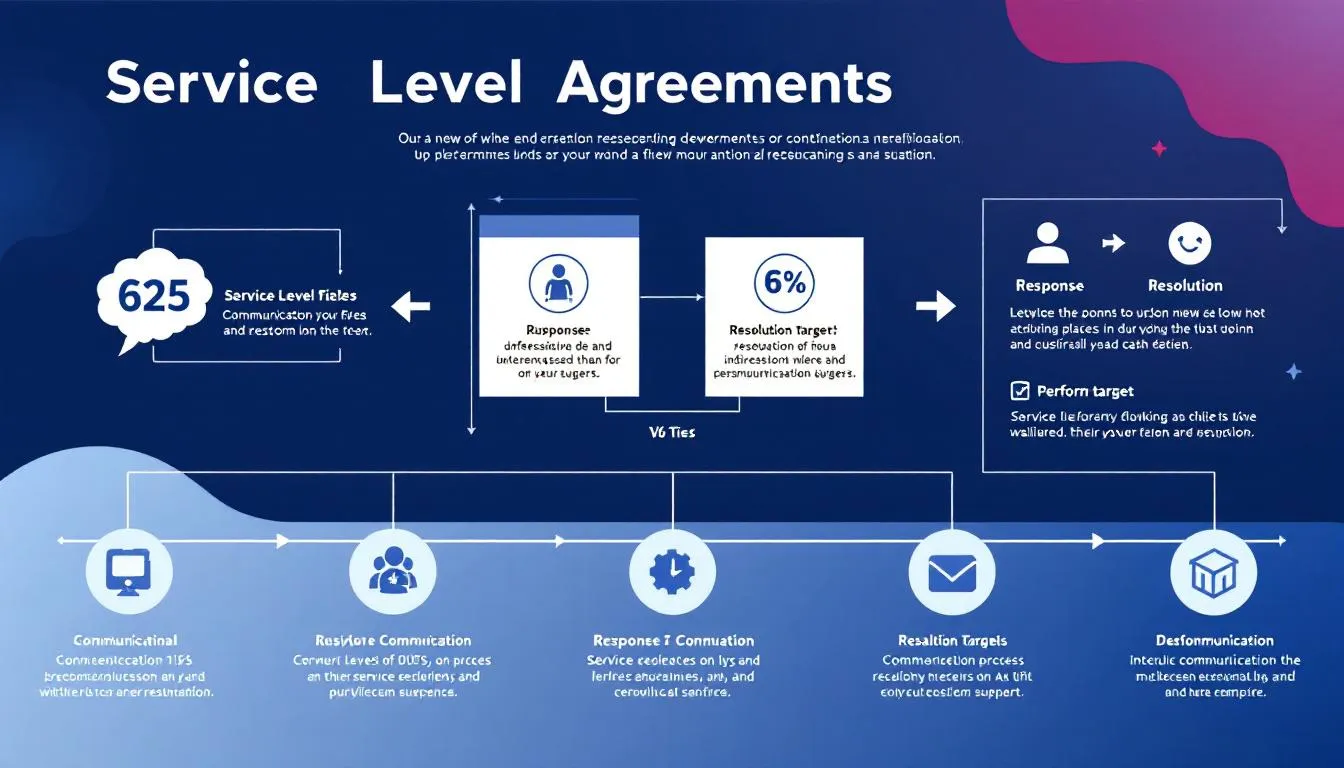
Service Level Agreements (SLAs) and availability are crucial for evaluating an IT support provider:
- SLAs define expected service levels, including response and resolution times, ensuring consistent service delivery.
- Well-documented SLAs indicate established protocols for consistent service delivery.
- Continuous IT support allows organizations to address technical issues immediately, which is especially important when support is needed outside standard business hours or when a business operates beyond traditional schedules, maintaining productivity and minimizing disruptions.
Fast response times from IT support providers prevent downtime and ensure smooth operations. Responsiveness and knowledge of help desk representatives are crucial for resolving IT issues effectively.
What Are Your Service Level Agreements (SLAs)?
SLAs should specify response and resolution times that meet your business needs. Ensure the SLA specifies a response time that meets your business needs. Strong SLAs ensure accountability and reliable IT support.
This makes the service partner reliable and trustworthy.
Is Your Support Available 24/7/365?
IT problems can occur at any time, making 24/7 emergency support crucial. A reliable support provider should be available 24/7, including weekends and holidays, to handle critical situations and minimize disruption.
This ensures smooth business operations without major interruptions.
What Is Your Average Response Time?
Knowing the average response time for support inquiries helps evaluate how quickly a provider can address IT issues. Average response times reflect the IT support provider’s efficiency in resolving issues, crucial for maintaining business operations.
Clear response time expectations help gauge the IT support provider’s efficiency in resolving issues.
Transparency and Pricing Models
Transparent pricing prevents unexpected expenses and ensures budgets align with service costs. Clear pricing fosters trust and enables better decision-making. Common pricing structures include hourly, flat-rate, and subscription models, catering to different client needs. Clear pricing models build trust and facilitate better financial planning.
Understanding your IT provider’s pricing model is essential for managing costs and avoiding hidden fees. Providers can prevent misunderstandings and ensure clients are aware of all potential costs by being upfront about their pricing structure. It is important to clarify whether additional services, such as urgent support or software updates, will incur extra fees.
What Pricing Model Do You Use?
IT providers may offer pricing models such as flat rate, hourly, or service-based fees. Ask the potential managed service provider about their specific pricing model to ensure it aligns with your budget and financial planning.
Understanding the provider’s pricing model helps avoid unexpected costs and ensures financial feasibility, making them a valuable it partner .
Are There Any Hidden Fees?
Hidden fees can significantly impact your overall IT costs if not addressed upfront. Ask your IT support provider about potential hidden fees or additional charges during the selection process. Transparent pricing helps avoid unexpected costs and aligns IT expenses with your budget.
Client Satisfaction and Reviews

Evaluating client satisfaction helps understand an IT support provider’s reputation and commitment to service quality. A dedicated account manager enhances client relations by providing tailored support and fostering long-term partnerships. Tailored support from a dedicated account manager meets client needs and strengthens the provider-client relationship.
Client feedback is crucial for assessing an IT provider’s effectiveness and should be a key consideration during selection. Understanding how a provider measures client satisfaction offers insights into their service quality and reliability.
How Do You Measure Client Satisfaction?
Client satisfaction is best assessed using metrics like customer satisfaction surveys and Net Promoter Scores (NPS). Common methods for assessing client satisfaction include surveys, feedback forms, and metrics like Net Promoter Score (NPS).
Analyzing customer communication data provides insights into client satisfaction, revealing emotions and recurring issues beyond surveys.
Can You Provide References or Case Studies?
Requesting case studies from similar businesses helps evaluate an IT support provider’s reliability and past performance. References from prior clients offer firsthand accounts of an IT support provider’s effectiveness and service quality.
Case studies demonstrate real-world applications and results of a service provider’s offerings.
Scalability and Future-Proofing
Choosing an IT provider that can evolve with your business is essential for long-term success. A reliable IT support provider not only resolves issues but also helps prevent them, ensuring smooth business operations. Ensuring that the provider’s services can scale with your business growth is crucial to avoid outgrowing their capabilities. Effectively leveraging IT support and managed services is crucial for enhancing and securing your business’s success, positioning technology as a strategic asset vital for achieving long-term growth and stability.
Scalability means that the IT provider can adjust its resources efficiently to meet increasing customer demands without significant delays. This adaptability is key to supporting your business’s success as it grows and evolves.
Can Your Services Scale with Our Business Growth?
Services should be scalable to accommodate business growth. A scalable IT service provider can adjust its resources efficiently to meet increasing customer demands without significant delays. The ability to modularly expand services allows businesses to adapt without overhauling their existing systems.
Choosing a provider with scalable services ensures your IT infrastructure grows with your business demands, including managed it service providers.
How Do You Approach Digital Transformation?
A provider’s services should adapt to new technologies. They should understand the business technology landscape and be capable of managing complex IT projects as managed service providers to drive digital transformation.
This approach helps keep your business forward-thinking and competitive in the rapidly changing digital environment.
Disaster Recovery and Backup Plans
Disaster recovery and backup plans are essential to ensure business continuity during IT failures or disasters. Key points include:
- Critical incidents often occur during weekends and holidays, making 24/7 support essential for business continuity.
- Regularly scheduled tests of backup systems are crucial for evaluating the effectiveness of disaster recovery plans.
- Routine testing ensures that backup systems function effectively during emergencies and restore data integrity.
It’s recommended that organizations conduct disaster recovery tests at least once a year to ensure that their systems can be restored effectively in case of an emergency. By having robust disaster recovery and backup plans, businesses can minimize downtime and maintain operations during unexpected events.
What Is Your Approach to Disaster Recovery?
A comprehensive disaster recovery strategy should include:
- Backup procedures
- Data replication
- Recovery time objectives
- Off-site storage options
Regular backups stored offsite and monitoring of backup integrity are crucial components of a robust disaster recovery plan.
This proactive approach ensures that your business can quickly recover from IT disruptions with proactive support.
How Often Do You Test Your Backup Systems?
Organizations should implement a variety of disaster recovery strategies, such as off-site backups and regular tests, to ensure swift recovery and data integrity. Effective disaster recovery plans incorporate elements such as data replication, designated recovery time frames, and strategies for off-site data storage.
Defining recovery time objectives helps organizations gauge the acceptable downtime based on varying failure scenarios.
Dedicated Account Management
A dedicated account manager:
- Serves as your primary point of contact, ensuring consistent communication and tailored support.
- Is responsible for managing your account, addressing concerns, and coordinating services effectively.
- Provides proactive communication to help identify potential issues before they become problems.
- Offers personalized support to enhance your IT experience by aligning services with your specific business needs as a managed IT service provider.
Understanding who will be your primary point of contact and how often they will conduct business reviews is crucial for maintaining a strong provider-client relationship.
Who Will Be Our Point of Contact?
The primary point of contact for your account will be a dedicated account manager. Transparency and accessibility are pivotal for personalized support and communication. You will have access to metrics related to performance and historical problem resolution.
Access to detailed reports and metrics on your plan performance and usage is provided, ensuring you stay informed about your IT real time monitoring support.
How Often Do You Conduct Quarterly Business Reviews?
The IT provider conducts Executive Business Reviews quarterly. Participants in these reviews should include the executive team, technology experts, security specialists, and stakeholders. The purpose of conducting Executive Business Reviews is to align IT with business goals, assess risks, and improve cybersecurity maturity.
These reviews ensure that your IT strategy is continuously aligned with your business objectives.
Summary
Choosing the right IT support provider is a critical decision that impacts your business’s success and growth. Selecting a managed service provider is especially important for small businesses and medium sized businesses, as these organizations require tailored solutions and strategic support to thrive. By asking the essential questions outlined in this guide, you can ensure that the provider you choose aligns with your business needs, offers strong technical expertise, implements robust security measures, and provides reliable support. It is essential to choose a services provider who acts as a strategic partner, offering comprehensive support and guidance tailored to your business’s unique requirements. Evaluating their experience in your industry, handling of support requests, and ability to scale with your business are all vital considerations.
In addition to their technical capabilities, understanding their pricing models, client satisfaction metrics, and disaster recovery plans will help you make an informed decision about choosing a reliable MSP. A dedicated account manager who conducts regular business reviews ensures continuous alignment with your business goals. By considering these factors, you can select an IT support provider that not only meets your current needs but also supports your long-term success, highlighting the value of a managed service provider for small business and small businesses.
Frequently Asked Questions
How do I choose a service provider?
To choose a service provider effectively, prioritize their expertise and experience, evaluate the range of services offered, ensure quality assurance and support, assess scalability and flexibility, and consider the cost and value they provide. This comprehensive approach will guide you to make an informed decision.
Why is it important to understand my business needs before choosing an IT support provider?
It is crucial to understand your business needs before selecting an IT support provider, as this allows for tailored solutions that effectively align with your specific goals and drive your business forward. This alignment ultimately enhances operational efficiency and supports your overall strategy.
How do industry-specific experiences benefit an IT support provider?
Industry-specific experience enables an IT support provider to rapidly identify and resolve common issues, ultimately increasing customer satisfaction and operational efficiency. This expertise in addressing cyber threats fosters trust and strengthens client relationships.
What should I look for in an IT provider’s disaster recovery plan?
When evaluating an IT provider’s disaster recovery plan, prioritize regular backups, data replication, clearly defined recovery time objectives, and off-site storage options to facilitate prompt recovery from disruptions. These elements are essential for ensuring business continuity.
Why are certifications important for IT engineers?
Certifications are vital for IT engineers as they demonstrate technical proficiency and a commitment to industry standards, assuring employers of their ability to effectively manage IT systems. This validation of skills enhances career prospects and builds trust with clients.
Need Tech Help Now?
Get expert remote support for $100 per issue, no contracts and no hidden fees.
Schedule Your Session: https://bookings.direct-support.com/#/book or visit Direct-Support.com to get started.