
Managed IT support includes proactive monitoring, strong security, 24/7 help desk support, cloud management, robust backups, and infrastructure services. It’s vital for businesses as it boosts efficiency, cuts downtime, and safeguards data. This guide will explain what managed IT support what it includes, why it matters, and show why it’s crucial for your business.
Key Takeaways
- Managed IT support encompasses proactive monitoring, comprehensive security, help desk support, cloud management, and robust backup and disaster recovery services.
- Utilizing managed IT services enhances operational efficiency, reduces IT costs through predictable pricing, and provides access to cutting-edge technology, thereby aligning IT strategies with business goals.
- Choosing the right managed service provider involves assessing their expertise, scalability, and service level agreements, ensuring they can meet specific IT requirements effectively.
What Managed IT Support Includes
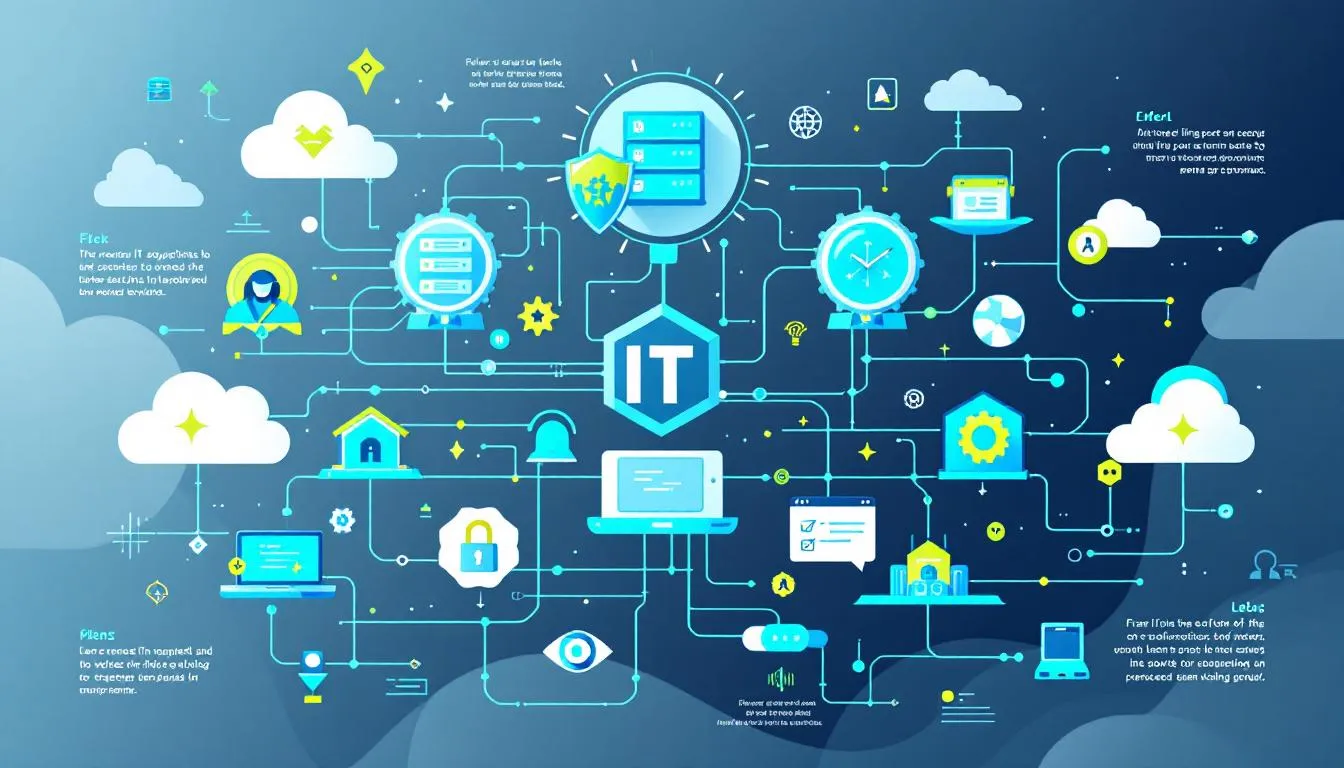
Managed IT support is an all-encompassing service that ensures your IT systems are always in top shape, highlighting its key features. It includes:
- Proactive monitoring and maintenance
- Comprehensive security services
- Help desk and technical support
- Cloud solutions
- Backup and disaster recovery
Managed services provide a proactive, scalable, and strategic approach to IT management, offering ongoing monitoring, support, reporting, and cost predictability as a comprehensive solution for your business technology needs.
These technology services encompass continuous improvement and strategic guidance on site, allowing businesses to focus on their core operations with the support of an in house team without worrying about IT issues from a service company. Managed service providers give businesses access to specialized expertise without the need to expand or retrain their internal team, making IT management more scalable and cost-efficient. Our infrastructure services focus on delivering the best solutions for your needs, contributing to business growth.
Managed service providers (MSPs) play a crucial role in this ecosystem. They offer proactive network management, cybersecurity measures, and strategic advisory services to ensure that your IT infrastructure is robust and resilient. From routine support and incident response to strategic planning, MSPs handle every aspect of your IT needs.
Proactive Monitoring and Maintenance
Proactive monitoring and maintenance are the cornerstones of managed IT services. This proactive approach involves:
- Real-time system monitoring to spot issues with servers or security before they escalate into major problems.
- Continuous monitoring of device management, performance, and software status, ensuring that any potential disruptions are addressed swiftly.
- Patch management, which reduces vulnerabilities and keeps your tools functioning efficiently.
The benefits of managed IT services in this area include reduced downtime, access to new technology, and enhanced business continuity. With ongoing support and routine maintenance, businesses can operate smoothly, knowing that their IT systems are in expert hands.
Comprehensive Security Services
In an age where cyber threats are becoming increasingly sophisticated, comprehensive security services are a critical component for financial institutions . Core security services include firewall management, antivirus protection, and vulnerability assessments. These measures are designed to protect sensitive data from various threats such as human error, phishing attacks, and ransomware.
A robust security strategy provided by managed service providers includes ongoing security and system functionality to reduce security risks and protect sensitive information through effective risk management. Advanced security measures like threat-hunting services ensure that your business stays one step ahead of cybercriminals.
Help Desk and Technical Support
Help desk and technical support are critical components of managed IT services, offering round-the-clock support services to address technical issues promptly. This 24/7 availability ensures that any IT problems are resolved quickly, minimizing downtime and maintaining business continuity. Proactive incident management further reduces the risk of prolonged downtime by addressing unexpected IT issues before they escalate, providing essential user support. A reliable support company can enhance these tech support services even further, especially when coordinated with support teams.
Centralized dashboards improve response times and ensure a consistent support experience. Unlike traditional IT support that operates during business hours, managed IT services provide continuous monitoring and support, ensuring that your IT systems are always operational.
Cloud Solutions and Management
Cloud solutions are a crucial part of managed IT support, providing businesses with control, visibility, and peace of mind. Full cloud management includes the integration of cloud services with existing platforms, facilitating seamless transitions and ongoing management. Hybrid cloud environments are becoming the norm, reflecting a shift in how businesses manage their IT infrastructure and cloud infrastructure.
Moving to the cloud can be complex if not done correctly, necessitating careful planning and execution by managed service providers. These providers ensure that cloud tools and collaboration tools are effectively managed, enhancing business operations and providing tailored solutions to meet specific needs.
Backup and Disaster Recovery
Reliable data backups and disaster recovery processes are essential for business continuity. Managed service providers regularly test recovery plans to ensure that, in the event of data breaches or system failure, your business can recover quickly and resume operations.
This combination of robust data backups and effective disaster recovery strategies protects organizations from data loss and ensures continuity management.
Why Managed IT Support Matters
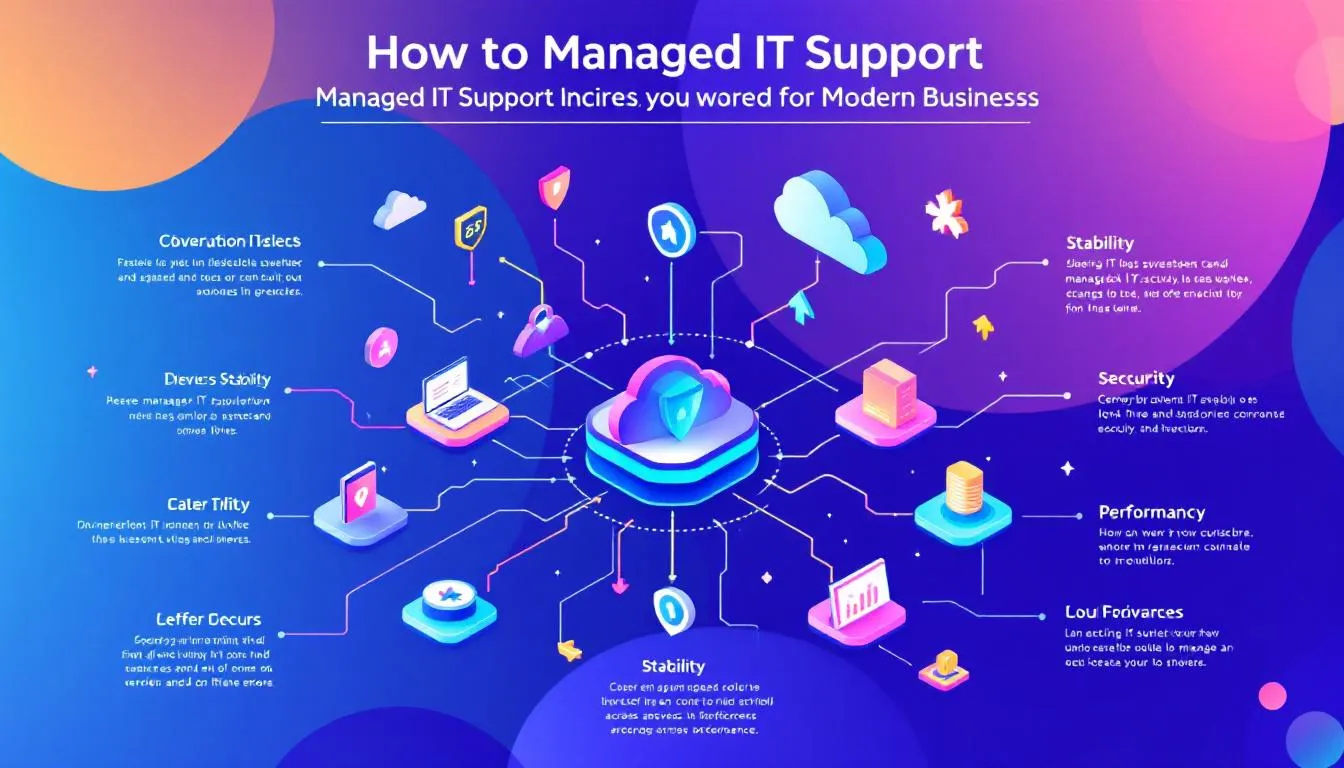
Managed IT support is not just a convenience; it’s a strategic asset that can significantly impact a business’s success. Companies can enhance operational efficiency, optimize costs, and access cutting-edge technology through managed IT services. Managed service providers also offer strategic IT planning and guidance, ensuring that your IT strategy aligns with your long-term business objectives.
For many businesses, especially SMBs, managed IT services provide a level of expertise and support that would be otherwise unaffordable. This allows companies to focus on growth and core operations without being bogged down by IT issues. The benefits of managed IT services are manifold, offering a cost-effective solution to complex IT challenges.
Enhancing Operational Efficiency
Proactive management and routine maintenance are key to enhancing operational efficiency, reducing downtime, and ensuring smooth system operations. Regular security assessments, including access controls, and performance reviews help identify and address vulnerabilities before they can be exploited, contributing to overall efficiency and helping you save money.
These proactive measures allow businesses to focus on their core operations, knowing that their IT infrastructure is secure and reliable. This alignment of technology assets with business goals ensures that companies rely on their desired outcomes more effectively.
Cost-Effective IT Management
Managed IT services offer a cost-effective approach to IT management by providing a predictable monthly fee that simplifies budgeting and eliminates unexpected expenses. This subscription-based pricing model allows businesses to manage and anticipate IT expenses more effectively. Outsourcing IT management often leads to significant cost savings, allowing businesses to reinvest in growth and innovation through a managed it service.
Minimizing disruptions through proactive IT management allows teams to focus on strategic priorities instead of constant troubleshooting. This reduction in downtime and streamlining of internal operations contribute to overall cost savings. Managed IT services also help shift businesses from capital expenditure to operational expenditure, lowering financial risks.
Regular performance reviews and updates of IT infrastructure are essential for adapting to changing business needs and technology advancements. These reviews ensure that your IT systems remain efficient and aligned with your business objectives, providing a cost-effective solution to IT management.
Access to Cutting-Edge Technology
Partnering with managed IT services provides businesses with access to specialized professionals who ensure that they remain competitive with the latest technologies. Managed service providers and it service providers utilize cutting-edge tools and artificial intelligence to optimize IT environments, enhancing operational efficiency and preventing potential downtimes.
This access to advanced technology not only helps in maintaining business continuity but also provides a competitive advantage in the market. The expertise of managed service providers helps businesses stay ahead of technological trends and keep their IT systems up-to-date.
Strategic IT Planning and Guidance
Strategic IT planning and guidance are essential for aligning your IT strategy with long-term business goals. Experienced professionals help ensure that your IT infrastructure supports your company’s long term goals and adaptation to changing market conditions. Industry experience is critical, as it enables managed service providers to offer tailored solutions that address specific challenges.
Deep discovery sessions and needs assessments are part of this strategic planning process, helping to identify current IT capabilities and desired outcomes. Involving department heads and end-users helps managed service providers gather valuable insights into IT needs, providing strategic guidance to achieve business goals.
In House vs Managed IT
When deciding how to manage IT services, businesses often weigh the benefits of maintaining an in-house IT team against partnering with a managed service provider. An in-house IT team offers the advantage of immediate, personalized support and a deep understanding of your company’s unique systems and culture. However, building and retaining such a team can be costly, especially when it comes to recruiting experienced professionals and keeping up with the latest technology. In-house teams may also struggle to provide round-the-clock coverage or handle complex technical issues that require specialized expertise.
On the other hand, managed IT services deliver a comprehensive solution by giving businesses access to a team of experts who provide proactive monitoring, routine maintenance, and strategic planning—all for a predictable monthly fee. A managed service provider can help enhance efficiency, reduce security risks, and ensure that your IT operations align with your core business objectives. By outsourcing IT services, companies can focus on their core operations while benefiting from the latest technology and best practices, without the overhead of managing an internal IT team. This approach allows businesses to scale their IT support as they grow, ensuring that technical issues are addressed quickly and efficiently.
Best Practices for Managed IT
To fully realize the benefits of managed IT services, businesses should adopt a set of best practices that foster collaboration and continuous improvement. Start by clearly defining your IT goals and objectives, ensuring that both your internal teams and your managed service provider are aligned on your company’s long-term vision. Establishing a detailed service level agreement (SLA) is essential, as it sets clear expectations for performance, response times, and accountability.
Open communication between your MSP and internal teams is key to successful IT operations. Regularly monitor and evaluate your IT systems and services to identify opportunities for optimization and address any technical issues before they escalate. Proactive management should be a priority, including patch management, device management, and risk management, to protect sensitive data and maintain system reliability. By following these best practices, businesses can maximize the benefits of managed IT services, streamline their IT operations, and support ongoing business growth.
Common Myths About Managed IT
Despite the clear advantages, several myths about managed IT services persist. One common misconception is that managed IT services are only suitable for large enterprises. In reality, managed IT services can be tailored to fit the needs and budgets of small and medium-sized businesses, providing scalable solutions that grow with your company.
Another myth is that outsourcing IT services means losing control over your business operations. In fact, a reputable managed service provider works collaboratively with your in-house team, offering transparency and regular updates to ensure your IT strategy supports your business goals. Some also believe that managed IT services are too expensive compared to maintaining an in-house IT team. However, managed IT services often prove more cost effective by reducing the need for large capital investments and minimizing downtime, while delivering the benefits of managed expertise and advanced technology. By dispelling these myths, businesses can make informed decisions and leverage managed IT services to enhance their operations.
Documentation and Managed IT
Comprehensive documentation is a critical component of effective managed IT services. Proper documentation provides a clear and up-to-date record of your IT systems, configurations, and services, which is essential for maintaining business continuity and ensuring customer satisfaction. Managed service providers should maintain detailed records, including network diagrams, system configurations, user manuals, and support procedures.
Regularly updating and reviewing this documentation helps reduce downtime, streamline troubleshooting, and support seamless transitions during staff changes or system upgrades. Thorough documentation also plays a vital role in demonstrating compliance with industry regulations and standards, such as HIPAA or PCI-DSS, which is especially important for businesses in regulated industries. By prioritizing documentation, companies can ensure their IT services remain reliable, secure, and aligned with best practices.
Choosing the Right Managed Service Provider
Selecting the right managed service provider is crucial for ensuring that your IT needs are met effectively. It’s important to assess specific needs and evaluate potential providers based on their expertise and communication practices. Companies with in-house IT teams may still benefit from managed service providers to handle specific functions like cybersecurity or backup management.
A thorough evaluation process helps ensure that the chosen provider aligns with your in house team and business requirements and offers the necessary support to achieve your goals.
Assessing Service Level Agreements (SLAs)
Service Level Agreements (SLAs) are vital as they outline the expected service levels and responsibilities between the provider and the client. Assessing SLAs helps ensure that the provider meets your business needs and delivers consistent, high-quality service.
Look for clear terms that define response times, resolution times, and performance metrics to ensure that the provider can deliver on their promises. Effective SLAs contribute to customer satisfaction and reliable IT support.
Evaluating Provider Expertise and Experience
Evaluating the expertise and experience of potential managed service providers is crucial. Providers should have an it team of seasoned experts with extensive technology knowledge to ensure effective IT support. Access to the latest tools and advanced technologies gives businesses a competitive advantage.
Choosing a provider with the right combination of expertise and tools ensures operational efficiency and innovation in IT processes. This evaluation helps businesses select a provider that can meet their complex IT needs.
Ensuring Scalability and Flexibility
Scalability and flexibility are essential features of managed IT services. These services can adapt as your business grows, scaling with changes in users, offices, and software integration. Managed service providers play a crucial role in ensuring that your IT systems evolve alongside your company’s needs.
A competent MSP provides the ability to adjust services swiftly in response to changing business demands, ensuring that your IT infrastructure remains efficient and aligned with your business goals. This scalability is particularly important for nonprofits and medium sized businesses that require affordable IT solutions to accommodate growth.
Transitioning to Managed IT Support
Transitioning to managed IT support involves several critical steps to ensure a smooth and effective integration. The process typically includes:
- Assessment
- Planning
- Implementation
- Ongoing support.
For a smooth transition, it’s essential to establish an efficient IT infrastructure management. This ensures that operations continue to run seamlessly.
Initial Assessment and Planning
Conducting a thorough assessment of the current IT infrastructure is the first step in the transition process. This assessment includes:
- Documenting software versions
- Creating network maps
- Recording backup schedules
- Detailing existing vendors
A comprehensive documentation baseline provides a clear understanding of existing IT resources and configurations.
After the assessment, precise planning is essential for a successful transition to managed IT support. This planning phase involves identifying gaps, setting objectives, and creating a detailed timeline for implementation.
Implementation and Integration
The implementation phase involves deploying new tools, integrating them with existing platforms, and conducting rigorous testing to ensure everything functions as expected. This step is critical as it ensures that the new IT systems are seamlessly integrated into your business operations without causing disruptions. Managed service providers work closely with internal teams and internal IT teams to facilitate this transition, ensuring that all technical aspects are covered and that the new tools are optimized for your business needs.
Once the implementation plan is executed, rigorous testing and validation are carried out to confirm the functionality of the new tools. This not only ensures that the systems work as intended but also provides an opportunity to make any necessary adjustments before full deployment. This phase is crucial for minimizing potential issues and ensuring a smooth transition.
Ongoing Support and Optimization
After the initial implementation, ongoing support and optimization are essential for maintaining the efficiency and reliability of your IT systems. Managed IT services offer ongoing monitoring. They also provide technical support to resolve any issues that could occur. This ongoing support ensures that your IT infrastructure remains robust and capable of supporting your business operations.
User feedback is invaluable during this phase, as it helps identify areas for improvement and refine processes. Continuous optimization of IT systems based on user input and performance data ensures your technology aligns with business goals and adapts to evolving needs.
Future of Managed IT
The future of managed IT services is being shaped by rapid advancements in technology and evolving business needs. As organizations increasingly adopt cloud computing, artificial intelligence, and the Internet of Things (IoT), the demand for sophisticated IT infrastructure and security services continues to grow. Managed service providers must stay ahead by investing in cutting edge technology and expanding their offerings to include advanced cloud management, AI-driven proactive monitoring, and robust security services.
Emerging trends include greater automation in incident response, more comprehensive cloud management solutions, and flexible service models tailored to the unique requirements of different industries. By embracing these innovations, businesses can ensure their IT services are future-proof, scalable, and aligned with their company’s long-term goals. Staying proactive and adaptable will be key to leveraging the full potential of managed IT services in an ever-changing digital landscape.
Summary
Managed IT support is an indispensable component of modern business operations. By offering proactive monitoring, comprehensive security, round-the-clock support, cloud services cloud solutions, and robust backup and disaster recovery, managed IT services provide a holistic approach to IT management. These services not only enhance operational efficiency and reduce costs but also give businesses access to cutting-edge technology and strategic guidance.
In a rapidly evolving digital landscape, partnering with the right managed service provider can make all the difference. By ensuring scalability, flexibility, and continuous optimization, managed IT support empowers businesses to focus on their core objectives and achieve sustained growth. As you consider transitioning to managed IT support, remember that the right provider will offer the expertise, tools, and support needed to keep your IT systems running smoothly and your business thriving.
Frequently Asked Questions
What are the 4 P’s of IT service management?
The 4 P’s of IT service management are People, Processes, Products (or technology), and Partners (or suppliers). These elements are essential for delivering effective services that align with customer needs and business goals.
What is managed IT support?
Managed IT support refers to the outsourcing of IT tasks to a vendor through contracted or subscription services, allowing organizations to alleviate workloads, supplement their teams, or replace them altogether. This approach enables businesses to focus on core operations while ensuring that their IT needs are effectively managed.
What is included in managed IT support?
Managed IT support encompasses proactive monitoring, maintenance, security services, help desk assistance, services managed cloud solutions, and backup and disaster recovery. This comprehensive approach ensures the continuous enhancement and strategic management of your IT infrastructure.
Why is managed IT support important for businesses?
Managed IT support, including patch management, is crucial for businesses as it enhances operational efficiency and reduces costs while ensuring reliable and secure IT systems. This allows companies to concentrate on their core operations without being distracted by IT-related issues.
How do managed IT services enhance operational efficiency?
Managed IT services enhance operational efficiency by providing proactive management and routine maintenance that minimize downtime and ensure smooth IT system operations. Additionally, regular security assessments and performance reviews identify vulnerabilities, further contributing to enhanced efficiency.
Need Tech Help Now?
Get expert remote support for $100 per issue, no contracts and no hidden fees.
Schedule Your Session: https://bookings.direct-support.com/#/book or visit Direct-Support.com to get started.