
Flat fee IT support, with a $150 per issue fee, delivers reliable remote tech help by offering a predictable pricing model. This article will explain how a $150 per issue fee delivers reliable remote tech help, ensuring consistent, high-quality IT support, helping businesses avoid unexpected costs and manage their tech needs efficiently. Additionally, flat fee IT support explained how a 150 per issue fee delivers reliable remote tech help, making it an attractive option for many organizations.
Key Takeaways
- Flat fee IT support offers predictable costs and unlimited access to professional help, simplifying budgeting for businesses.
- The $150 per issue fee model enhances cost predictability and trust by providing a clear pricing structure for tech support services.
- Businesses utilizing flat fee IT support have reported significant operational improvements, including reduced costs, decreased downtime, and enhanced service delivery.
What is Flat Fee IT Support?

Flat fee IT support is a game-changing approach that allows businesses to pay a fixed price for help desk support and unlimited IT assistance, making budgeting a breeze. Key features include:
- Predictable monthly IT expenses, avoiding unexpected charges unlike traditional fluctuating costs.
- Access to qualified professionals available 24/7.
- Comprehensive coverage without the worry of hourly rates.
Compared to managing an in house IT team, flat fee IT support often results in lower and more predictable costs, as businesses avoid the expenses associated with hiring, training, and maintaining internal staff.
Flat fee pricing eliminates unpredictable monthly cost charges, stabilizing IT costs. This approach provides businesses with comprehensive coverage and eases the stress of fluctuating fees, facilitating more effective planning and resource allocation through per user pricing and per device pricing. Some providers also offer a per ticket pricing model, where each support request is billed individually, which can lead to less predictable costs compared to the stability of flat fee IT support. Flat fee IT support can supplement or even replace an internal IT team, which is especially valuable for small business owners who may not have the resources to maintain a full in house department.
Imagine the peace of mind knowing that your IT support costs are fixed, allowing you to focus on strategic guidance to control expenses business forward future growth rather than managing unpredictable expenses. Small business owners often find flat fee IT support particularly beneficial due to limited resources for small business in house IT management.
How Does a $150 per Issue Fee Work?
The $150 per issue fee model is designed to provide a straightforward pricing structure for tech support services. This fee typically covers the resolution of individual tech support issues, allowing clients to anticipate costs for specific help requests. Charging a flat fee per issue allows businesses to predict their tech support expenses more accurately, eliminating concerns about unexpected billing or hourly rates. Compared to other support pricing structures, such as hourly billing or tiered plans, the $150 per issue fee offers a simple and transparent alternative.
This pricing model simplifies budgeting and enhances trust in service responsiveness and reliability. No more hidden fees or surprise costs—just a clear, fixed rate that helps businesses manage their tech budget more effectively. Understanding the services cost associated with each support request enables businesses to evaluate the value of the $150 per issue fee and make informed decisions about their IT spending. This model offers both predictability and high-quality support exactly when needed.
Some providers may offer different service packages, which can include or exclude certain types of support under the $150 per issue fee, giving businesses flexibility in choosing the right level of service for their needs.
Benefits of Flat Fee IT Support
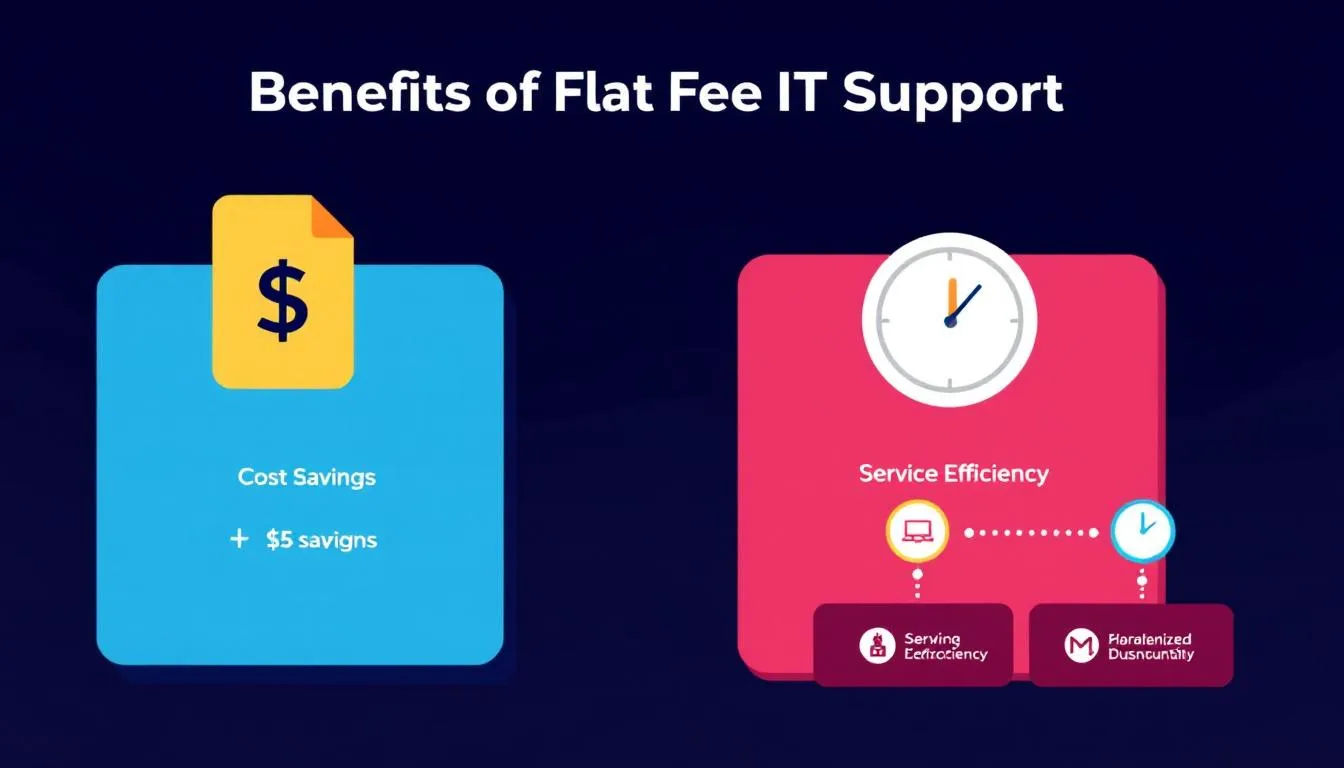
The benefits of flat fee IT support extend beyond just predictable costs. Businesses across various industries have seen significant improvements in their operations and bottom lines. For instance, a local municipality reported better budget management and predictable service levels after switching to a flat fee model. Similarly, a financial services firm reduced its IT expenses by 25% and decreased downtime by 60%.
The advantages of flat fee IT support include:
- Improved productivity in manufacturing companies
- Streamlined IT expenses in healthcare providers
- Reduced costs
- Ensured compliance with regulatory standards
- Enhanced service delivery
- Support for defense contractors who require strict compliance and robust IT security
Flat fee IT support helps organizations meet strict compliance and compliance requirements, especially in industries handling sensitive data. Protecting sensitive data is crucial for organizations such as healthcare providers, financial firms, and defense contractors, as breaches can have serious consequences.
Cost Predictability
A standout benefit of the $150 per issue fee model is cost predictability. Businesses can rely on a clear, fixed rate for IT support cost, improving budgeting accuracy. This predictability helps organizations manage their IT budgets more effectively, turning unpredictable expenses into stable, manageable costs.
Flat-rate pricing models eliminate unexpected charges, making budgeting easier for clients. This stability allows businesses to focus on growth and strategic planning without the constant worry of fluctuating IT expenses and monthly cost variation .
Simplified Billing
Flat rate invoices make it simpler for companies to manage IT expenses. Eliminating complex invoicing reduces administrative workload and increases efficiency. Simplified billing removes the hassle of deciphering detailed hourly charges or unexpected costs, resulting in predictable expenses and streamlined financial management.
The overall benefits of simplified billing include:
- Increased efficiency
- Predictable budgeting for IT costs
- Save money and time
- Allowing businesses to allocate resources more effectively
- Enabling businesses to focus on their core operations, ultimately reducing costs.
It’s a straightforward approach that supports these advantages.
Consistent Service Levels
A flat fee model fosters a dependable quality of service, enhancing overall business operations. A flat fee model ensures uniform quality across all IT support, crucial for maintaining efficiency and reliability. This consistency is vital for businesses relying on steady, uninterrupted IT services.
Consistent service levels mean that businesses can expect the same high standard of support every time they need help, as outlined in the service level agreement. This reliability is vital for maintaining productivity and minimizing downtime, ensuring that IT issues are resolved quickly and efficiently.
Services Included in the $150 Issue Fee
The $150 per issue fee covers a range of IT technical support services, ensuring businesses receive comprehensive assistance without unexpected costs. Basic IT support typically includes remote assistance, software troubleshooting, and password management. These essential services, including on site support, ensure that common IT issues are resolved promptly and efficiently, minimizing disruptions to business operations. On site support can also be arranged for issues that require in-person troubleshooting or cannot be resolved remotely.
More comprehensive managed IT services often include ongoing network monitoring and help desk support. This means businesses can rely on continuous oversight of their IT infrastructure, ensuring that potential issues are identified and resolved before they become major problems. Additionally, a standard service package may offer features like server management, basic cybersecurity measures, desk service, co managed help desk support, and assistance with data backup for business continuity and security.
Covering these specific services ensures businesses have access to a wide range of support options from a services provider, providing peace of mind and reliable IT assistance whenever needed.
Factors Affecting Support Cost
When evaluating IT support services, it’s important to recognize that support costs are shaped by several factors unique to each business. The type of support services required—ranging from basic help desk support to advanced network monitoring—directly impacts the overall cost of IT support. Managed service providers (MSPs) also consider the size of your business and the complexity of your IT systems when determining pricing.
For small businesses, support costs can represent a significant portion of the tech budget, making it crucial to select a pricing model that aligns with business needs. Options such as flat fee, per user pricing, and hourly rates each offer different advantages. Flat fee models provide predictable expenses, while per user pricing allows costs to scale with your team. Hourly rates may suit businesses with occasional support needs but can lead to unpredictable expenses if issues arise frequently.
Understanding these several factors helps businesses make informed decisions about their IT support strategy, ensuring they receive the right level of service from their service provider without overspending. By carefully assessing your requirements and comparing pricing models, you can control expenses and maximize the value of your IT investment.
Budgeting for IT Support
Budgeting for IT support is essential for any business aiming to control expenses and maximize the value of its tech investments. Managed service providers offer a variety of pricing models—such as flat fee, per user pricing, and per device pricing—allowing businesses to select the approach that best fits their operational needs and tech budget. By understanding these options, companies can allocate resources more effectively and avoid overspending on unnecessary services.
A well-structured IT budget takes into account the number of users, the types of devices in use, and the specific services required to keep operations running smoothly. Service providers can help businesses forecast costs and plan for future growth by recommending the most suitable pricing models. Regularly reviewing and adjusting the IT budget ensures that it remains aligned with evolving business needs, helping organizations stay agile and competitive. Ultimately, effective budgeting for IT support empowers businesses to make informed decisions, prioritize critical investments, and maintain predictable costs.
Ensuring Reliable Remote Tech Help

Reliable remote support tech support is crucial for maintaining system performance and minimizing downtime. Key benefits include:
- Proactive monitoring to identify and resolve potential issues before they escalate, ensuring smooth operations.
- Remote monitoring and 24/7 after hours support, allowing issues to be addressed at any time.
- Enhanced customer satisfaction and operational efficiency for businesses.
A rapid average response time of 2 minutes ensures that IT issues are dealt with promptly by the IT department, reducing downtime and maintaining productivity on personal devices and mobile devices. Experienced IT providers are adept at resolving the same problems that frequently occur across similar organizations, leading to faster and more efficient support. Strong security monitoring measures, including data encryption and regular vulnerability assessments, are also crucial in preventing security breaches.
Validating a provider’s disaster recovery plan ensures business continuity in emergencies.
Comparing Flat Fee IT Support to Other Pricing Models
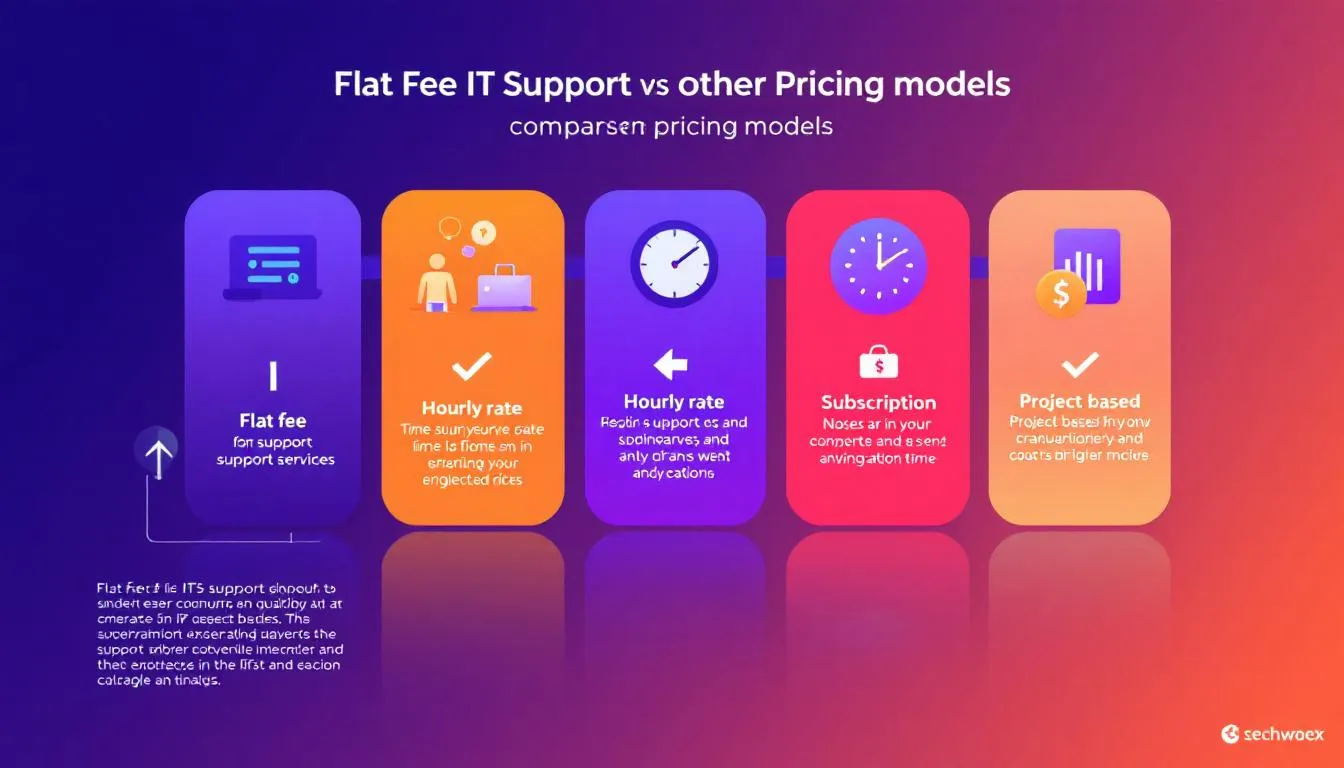
Various pricing models exist for outsourcing IT help desk services, including:
- Flat fee: Allows businesses to access advanced technology without large initial investments, offers better cost control, and ensures predictable service levels.
- Hourly rates: Typically range from $75 to $150 per hour.
- Per ticket charges.
The costs associated with per ticket IT support can vary widely based on the complexity of issues addressed. This unpredictability can make budgeting challenging, whereas flat fee pricing offers a consistent cost structure, allowing businesses to budget effectively without unexpected expenses related to ticketing systems.
Hourly Rates vs. Flat Fee
Using a flat fee structure helps companies avoid unexpected or variable costs associated with hourly billing. Transparent pricing in IT support eliminates hidden costs, aids financial planning, and simplifies budget management. The typical hourly rate for IT help desk support ranges from $75 to $150 per hour, making budgeting unpredictable, especially when considering the average cost of IT services. So, how much does it cost for these services? The cost of it support can vary significantly based on the service provider.
Businesses often opt for hourly payment when they require support for infrequent or one-off issues. For ongoing support needs, flat fee models offer a more predictable and cost-effective solution.
Tiered Services vs. Flat Fee
Tiered service models offer different levels of service at variable pricing based on the features and support needed. These models can lead to unpredictability in costs as businesses may not always know what tier of service they will need at any given time. Flat fee pricing, on the other hand, provides a consistent cost structure, allowing businesses to budget effectively without unexpected expenses. Additionally, businesses can explore various pricing strategies to optimize their service offerings.
While tiered services can be more flexible, allowing businesses to choose packages that best fit their specific needs, this flexibility may sacrifice cost predictability and comprehensive service that a flat fee model guarantees. Ultimately, the choice depends on a business’s operational needs and financial management preferences.
Contract Terms and Conditions
Before partnering with a managed service provider, it’s essential to thoroughly review the contract terms and conditions to ensure they meet your business’s unique requirements. A well-structured contract should clearly define the scope of services, including what is covered under the service package, expected response times, and designated support hours. This transparency helps prevent misunderstandings and ensures you receive the level of support your business needs.
A comprehensive service level agreement (SLA) is a critical component, outlining the standards your service provider commits to, such as uptime guarantees and response times for different types of issues. It’s also important to look for any hidden fees or additional charges, such as after hours support or infrastructure costs, which can impact your overall support costs.
By carefully examining the contract, you can avoid unexpected expenses and ensure your managed service provider delivers reliable, cost-effective support. Taking the time to understand these details upfront will help you build a strong, transparent partnership with your IT service provider.
Total Cost of Ownership
When evaluating IT support services, it’s important to look beyond the monthly service fee and consider the total cost of ownership (TCO). TCO includes not only the direct payments to your IT vendor, but also the costs of hardware, software, infrastructure, and personnel. It also factors in ongoing expenses such as maintenance, upgrades, and repairs. Managed IT services often appear more expensive upfront compared to hourly or break-fix models, but they can save money over time by reducing downtime, preventing costly emergencies, and optimizing resource use.
By taking a holistic view of all it services and support services, businesses can identify opportunities to streamline operations and reduce unnecessary expenses. For example, consolidating vendors or adopting new technologies can lower support costs and improve efficiency. Understanding the TCO helps organizations choose the most cost effective solutions, ensuring that every dollar spent on managed IT services delivers maximum value and supports long-term business goals.
Customization and Scalability
Every business has unique IT needs, and managed IT services should be flexible enough to adapt as those needs evolve. Customization allows your service provider to tailor support services to your specific requirements, whether you need specialized expertise, enhanced security monitoring, or support for multiple devices and cloud hosting.
Scalability is equally important, especially for small and medium sized businesses planning for future growth. As your business expands, your IT systems and support needs will change. A managed service provider offering flexible pricing models—such as flat rate pricing or per user pricing—makes it easy to adjust your service package and support costs as your team grows or your technology infrastructure becomes more complex.
Proactive monitoring and technical support are essential features of managed IT services, helping to prevent issues before they disrupt your operations. By choosing a service provider that prioritizes customization and scalability, you ensure your IT support can keep pace with your business, providing the foundation for ongoing success and business growth. This approach is especially valuable for organizations with limited internal IT resources, allowing them to access specialized expertise and maintain reliable, cost-effective IT systems.
Technology and Hardware
The technology and hardware choices a business makes have a direct impact on support costs. Outdated or inefficient equipment can lead to frequent breakdowns, higher maintenance expenses, and increased downtime. In contrast, investing in modern, high-quality hardware can reduce support costs and enhance overall performance. Many businesses are also turning to cloud-based services and virtualization to minimize their reliance on physical hardware, further reducing expenses and improving scalability.
Selecting compatible and integrated technologies is crucial for seamless operation and minimizing potential issues. By proactively managing technology assets and planning for regular upgrades, businesses can keep support costs in check and ensure their IT infrastructure remains reliable and efficient. Ultimately, smart technology and hardware decisions are key to optimizing IT investments and controlling long-term support costs.
Vendor Expertise
The expertise and reputation of your managed service provider play a pivotal role in the quality and cost of your IT support services. Partnering with a service provider that offers specialized expertise, proactive monitoring, and robust security monitoring can help you optimize your IT systems, reduce the overall cost of it support, and ensure predictable costs for your business.
A reputable managed service provider brings industry-specific knowledge and a proven track record of delivering high-quality support services. This means you benefit from unlimited support, rapid response times, and strategic guidance tailored to your unique business needs. Providers with advanced capabilities in proactive monitoring and security monitoring can identify and resolve issues before they impact your operations, safeguarding your sensitive data and minimizing downtime.
Choosing a service provider with the right expertise not only enhances the reliability of your IT systems but also helps you save money by preventing costly disruptions and ensuring your technology investments deliver maximum value.
Choosing the Right Service Provider
Choosing the right managed service provider starts with evaluating your organization’s specific IT needs. Key considerations include specialized expertise, reputation, expertise, service level agreements, and industry-specific experience, which can greatly enhance managed service providers’ ability to meet your IT challenges.
When investigating many providers, consider the following:
- Ensure their portfolio aligns with your business requirements.
- Check for scalability; the provider should adapt their services as your business grows.
- Review references and client reviews to gain insight into reliability and service quality for new clients.
Effective communication channels and customer support are vital for prompt IT issue resolution. The service model focuses on building long-term relationships between clients and the IT team, ensuring ongoing support and satisfaction.
Real-World Examples of Flat Fee IT Support Success
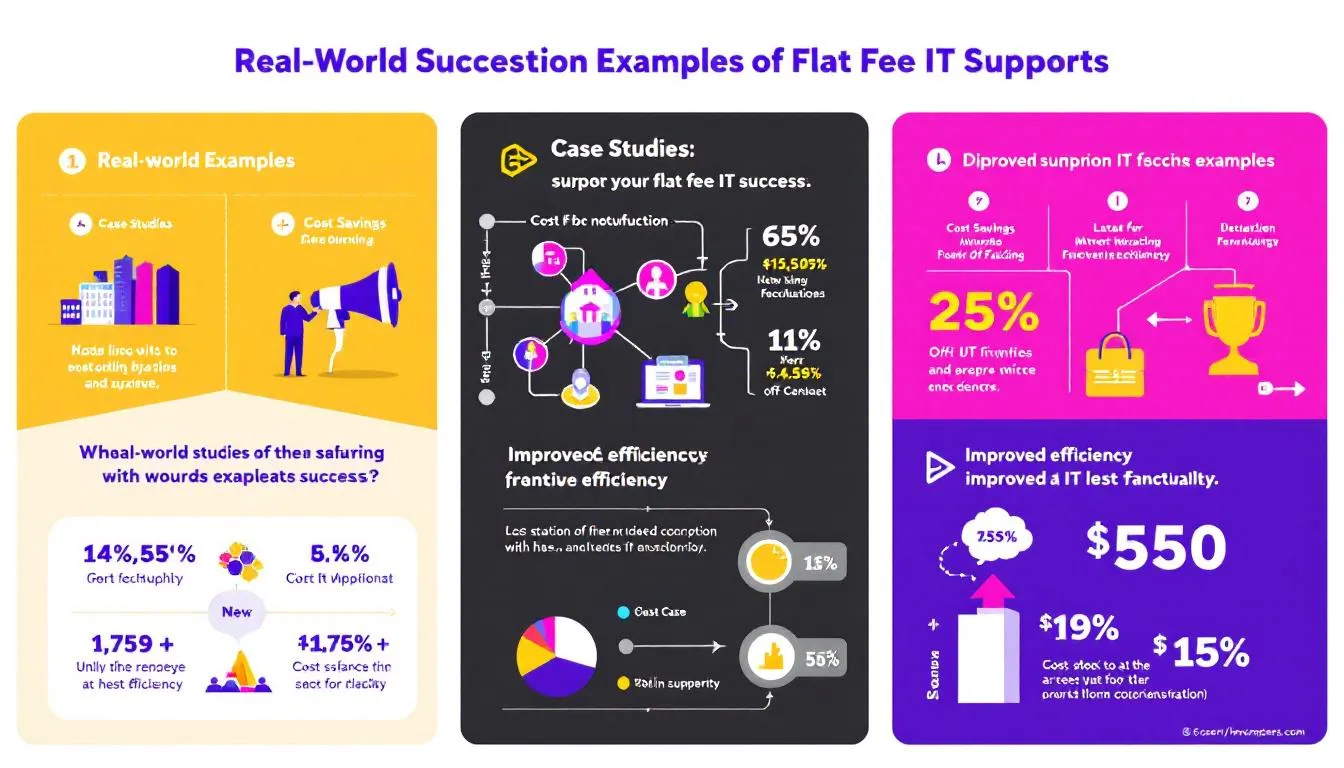
Real-world examples highlight the tangible benefits of flat fee IT support. A small retail business switched to a flat fee model, reducing their tech intervention costs by 30% and ensuring rapid response times. A medium sized businesses software company adopted flat fee IT support, increasing their productivity by 25% due to minimized downtime. Additionally, smaller businesses can also benefit from this model.
A large manufacturing firm streamlined its IT operations with flat fee support and break fix services, ultimately saving over $50,000 annually in unforeseen technical issues. Several businesses have reported enhanced customer satisfaction through faster service resolutions and consistent quality under a flat fee model.
Summary
Flat fee IT support offers a range of benefits, from cost predictability and simplified billing to consistent service levels and comprehensive coverage. The $150 per issue fee model provides a clear, fixed rate for IT support, simplifying budgeting and enhancing trust in service responsiveness. By comparing this model with other pricing strategies, businesses can see the advantages of flat fee IT support in terms of stability and cost control.
Choosing the right service provider is crucial for maximizing these benefits. By evaluating your business needs and considering factors such as reputation, expertise, and scalability, you can find a provider that aligns with your goals. Real-world success stories demonstrate the significant improvements in cost savings and service quality that flat fee IT support can offer. Embrace this model, and watch your business thrive with reliable, cost-effective IT support.
Frequently Asked Questions
What is flat fee IT support?
Flat fee IT support provides businesses with IT assistance for a fixed price, simplifying budgeting and ensuring predictable expenses. This approach allows for comprehensive support without unexpected costs.
What does $150 per issue cover?
A single, clearly defined problem handled by remote support. If we uncover a different problem, we will ask before proceeding.
How long is a session
We work the issue to completion. If additional work or an on site visit is needed, we quote it first.
Do I need a contract or subscription
No. Pay only when you need help.
Do you offer on site service
Yes. On site visits are quoted separately when remote repair is not possible.
Do you support businesses
Yes. For admin tasks or priority needs, we can price at $150 per issue or quote a managed plan if you need ongoing work.
What if my issue returns
If the same symptom returns within 7 days and no new changes were made by the user or a third party, contact us. We will review the case and make it right.
What if I have several problems at once
We will help you triage and choose the first issue to fix. After that, you can open a new issue for the next problem, or ask for a project quote if they are related.
What are the main benefits of flat fee IT support?
The main benefits of flat fee IT support are cost predictability and simplified billing, which contribute to consistent service levels and enhanced overall business operations. This model helps businesses manage their IT expenses effectively while ensuring reliable support.
Need Tech Help Now?
Get expert remote support for $150 per issue, no contracts and no hidden fees.
Schedule Your Session: https://bookings.direct-support.com/#/book or visit Direct-Support.com to get started.