
If you’re comparing a $100 IT issue fee vs traditional hourly IT billing, which saves you more? This article breaks down the costs and benefits of each model, specifically focusing on the 100 IT issue fee vs traditional hourly IT, which saves you more.
Introduction to IT Pricing Models
Choosing the right IT pricing model is essential for businesses aiming to control technology expenses and maximize value. The two most common approaches are hourly pay (also known as hourly pricing) and flat rate pricing. With hourly pay, businesses are billed for the actual time spent on a project or support issue, making it easy to track costs for each task. This pricing model offers flexibility and transparency, as you only pay for the time spent on your specific needs. However, hourly pricing can be unpredictable—if a project takes longer than expected, costs can quickly escalate, and scope creep can become a real concern.
On the other hand, flat rate pricing charges a fixed price for a defined job or service, regardless of the time spent. This approach provides predictable costs and encourages efficiency, as both the client and the service provider are motivated to resolve issues quickly. Flat rate pricing makes budgeting easier and helps avoid surprise expenses. However, estimating the right fixed price can be challenging, and there’s a risk of undercharging for complex projects or overcharging for simple ones. Understanding the strengths and limitations of each pricing model helps businesses make informed decisions that align with their goals and risk tolerance.
Key Takeaways
- The $100 IT issue fee offers predictability and simplicity in budgeting, reducing the complexity of tracking costs compared to traditional hourly billing.
- Hourly billing provides flexibility for complex projects, but can lead to unpredictability in costs and client anxiety over accruing charges.
- Implementing a flat rate pricing model can lead to significant cost savings and improved profit margins, especially for businesses with repeatable IT issues.
Understanding the $100 IT Issue Fee
The $100 IT issue fee represents a flat fee model where businesses pay a fixed amount of $100 for each IT issue, regardless of the time taken to resolve it. This flat rate pay system offers several advantages:
- Shifts the focus from the hours worked to the task completed
- Offers simplicity and predictability in billing
- Eliminates the need to track every minute
- Streamlines workflows
- Simplifies communication and management of IT services
Many businesses choose flat rate pricing as part of their pricing strategy to automate and standardize billing, which improves accuracy and profitability.
Flat rate pricing is particularly beneficial when tasks are repeatable, and the scope is clear. It provides a straightforward approach to budgeting, helping businesses avoid unexpected charges and better plan their finances. This model suits companies needing effective IT budgeting with predictable costs.
Traditional Hourly IT Billing Explained
Traditional hourly IT billing involves charging a fixed rate for each hour of work completed under an hourly rate pay system . Typically, the hourly rate for IT services ranges from $75 to $200, depending on the complexity of the task and the expertise required. One of the key advantages of hourly pricing is the flexibility it provides, especially for projects that are unpredictable or have evolving requirements, including considerations for hourly rate pay, hourly wage, and hourly wages.
However, hourly billing requires meticulous time tracking to ensure accurate invoicing and transparency. Clients may find hourly fees unpredictable, leading to anxiety and hesitation when seeking support for minor issues. This unpredictability can complicate budget management and lead to revenue uncertainty for support services consultants, especially if clients question the hourly fee billed.
Despite these drawbacks, hourly pricing is common for projects with unclear or changing scopes. It allows for flexibility in addressing complex IT issues that may require varied responses, making hourly work a viable option for certain types of projects charged per hour .
Cost Comparison: $100 IT Issue Fee vs. Hourly IT Billing
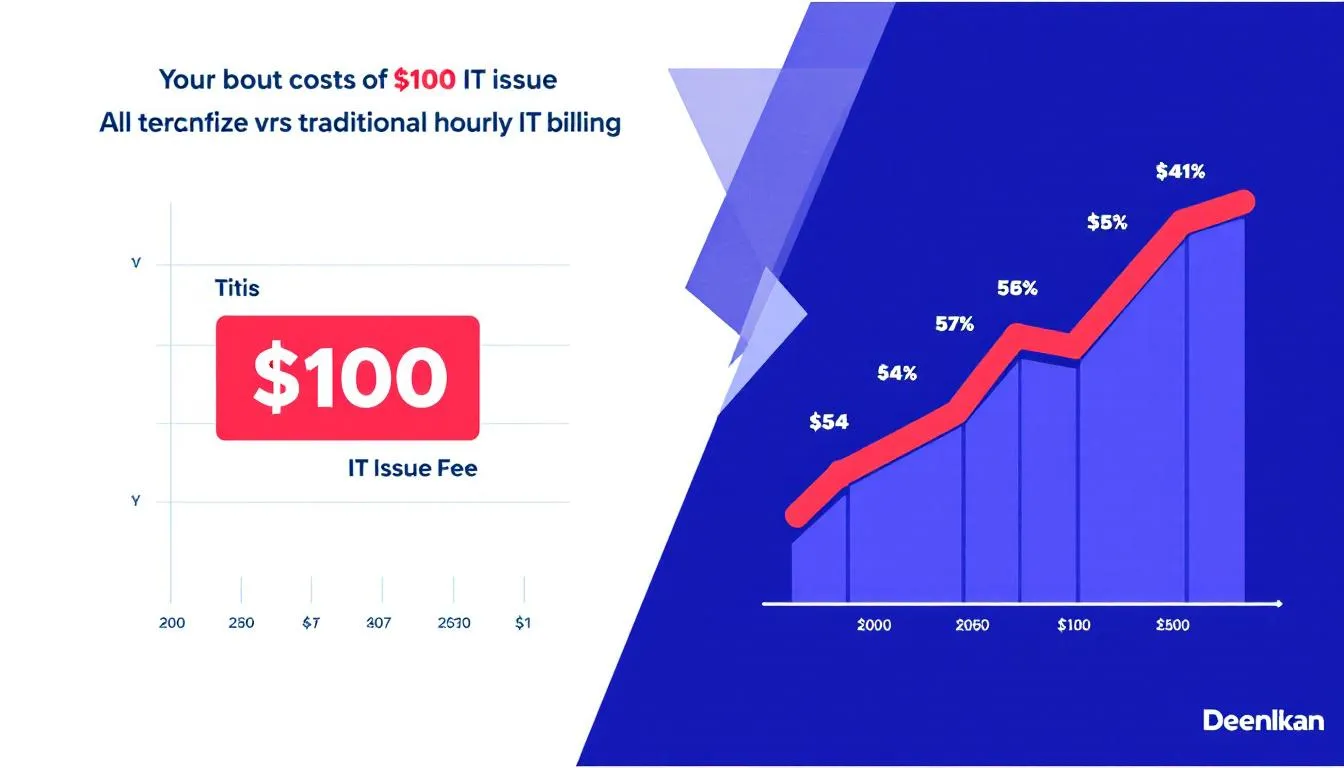
When comparing the $100 IT issue fee to traditional hourly billing, several factors come into play. The flat rate pricing model can lead to significant cost savings, especially for businesses that encounter multiple IT issues regularly. For instance, one business found that their savings from a flat-rate IT service covered the cost of additional consulting services, highlighting the potential for cost-effective IT management. The choice between flat rate and hourly billing also affects how businesses approach paying employees, as each model influences payroll management and employee productivity differently.
Additionally, the $100 IT issue fee system allows businesses to predict their IT costs more accurately, aiding in financial planning and budgeting. This predictability can be a significant advantage over hourly billing, where costs can fluctuate based on the time spent by tech support resolving issues.
Real-World Examples
Consider the case of a nonprofit organization that switched to a managed IT service plan. Switching to a flat rate model saved them $700 per month or $8,500 annually. This substantial saving allowed them to redirect funds towards other critical areas, demonstrating the financial benefits of predictable IT services cost.
Another example is a business that found the $100 IT issue fee covered multiple minor issues, leading to overall cost savings compared to hourly billing. Hourly rate billing can be particularly suitable for small business owners who are just starting out or have limited resources, as it allows them to pay only for the support they need. These real-world examples underscore the potential for businesses to save money and improve their financial management with flat rate pricing models at a discounted rate and fixed fees.
Predictability in Budgeting
The $100 IT issue fee offers a clear understanding of IT-related costs. This predictability aids in more accurate budgeting, as service business can allocate their tech budget more effectively without worrying about unexpected changes in costs.
Flat rate pricing simplifies bookkeeping by reducing the complexity of tracking hours worked. With a predictable cost structure, both customers and service providers can better prepare for financial commitments, ensuring smoother financial planning and control over expenses through the billing process of flat rate services, fixed price options, and fixed cost agreements.
Impact on Profit Margins
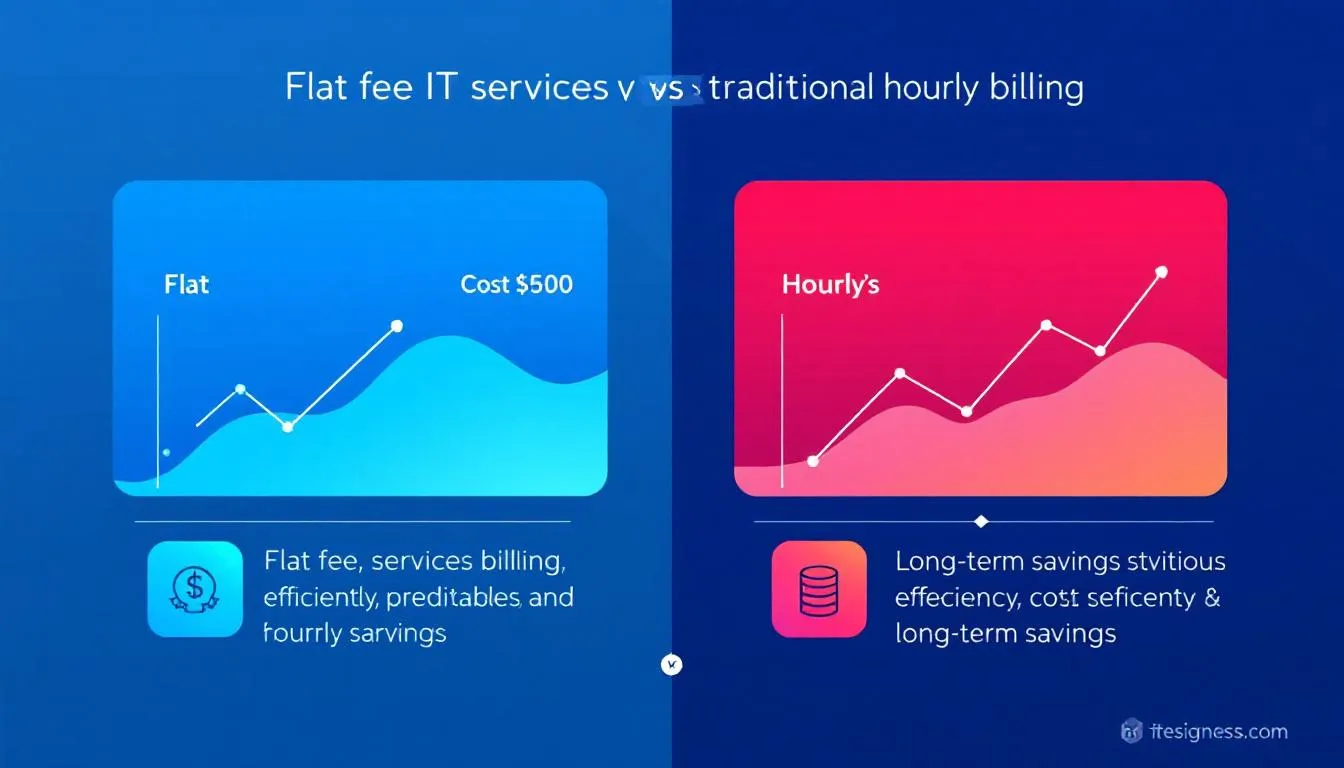
Switching to a flat fee for common IT tasks led one small business owner to experience a 50% reduction in IT costs, resulting in less money spent on support costs. This significant decrease can directly improve profit margins, allowing small businesses to invest in network monitoring and growth opportunities.
Flat-rate pricing also allows businesses to increase revenue by booking more jobs when tasks are completed faster than expected. This efficiency can enhance cash flow by reducing billing cycles and enabling customers to pay upfront or at job completion as the business grows.
However, hourly billing can lead to unpredictable profits, as costs may escalate due to unforeseen complications during a project. Recognizing scope creep early and establishing clear pricing strategies is essential for maintaining sustainable profit margins.
Client Relationships and Satisfaction
Hourly billing often causes client anxiety due to the perception of constantly accruing charges. This unpredictability can deter clients from seeking assistance when they have minor queries, leading to unresolved issues and dissatisfaction. Clients may worry that professionals will charge hourly, adding to their concerns.
Flat-rate billing can enhance client satisfaction with its transparency and predictability. Clients favor flat-rate pricing as it offers clear and predictable costs, enhancing trust and loyalty towards the service provider. Understanding the flat rate pricing pros can further solidify this positive relationship.
Flexibility and Scope Creep
A potential downside of hourly billing is the risk of scope creep and unpredictable higher costs, along with additional costs and overhead expenses. This can complicate budget management and financial planning, making it challenging for businesses to control expenses effectively.
However, hourly billing provides flexibility in addressing complex IT issues that may require varied responses. Businesses must weigh the flexibility of hourly billing against the risks of cost unpredictability when choosing a pricing model.
Co-Managed IT Services: A Cost-Effective Alternative
Co-managed IT services offer a flexible, cost-effective solution for businesses that want the best of both worlds: the control of an in-house IT team and the expertise of external service providers. In a co-managed model, your internal staff handles day-to-day IT operations, while a specialized service provider steps in to manage specific tasks or projects—such as network monitoring, cybersecurity, or cloud migrations. This approach allows businesses to access advanced IT services without the full expense of outsourcing everything.
By leveraging co-managed IT services, companies can reduce support costs, improve efficiency, and strengthen their IT infrastructure. For example, a business might keep software development and user support in house, while outsourcing network monitoring and security to a trusted provider. This targeted use of external expertise ensures that your team can focus on core business needs, while still benefiting from the latest technology and best practices. Ultimately, co-managed IT services help businesses control expenses, optimize their IT budget, and achieve a more cost effective balance between internal resources and outside support.
Total Cost of Ownership: Looking Beyond the Sticker Price
When evaluating IT pricing models, it’s important to look beyond the initial sticker price and consider the total cost of ownership (TCO). TCO includes all direct and indirect expenses associated with an IT solution—such as hardware, software, labor, maintenance, and ongoing support. Focusing solely on upfront costs can be misleading; a lower initial price may come with higher long-term expenses, while a higher upfront investment could lead to savings over time.
For instance, a cloud-based IT service might offer a low entry cost but require ongoing subscription fees, while an on-premise solution could involve a larger initial outlay but lower recurring costs. Factoring in the total cost helps businesses budget more accurately and avoid unexpected expenses down the road. By understanding the TCO, you can make smarter decisions about which IT investments will deliver the best value for your business over the long term.
IT Support Costs: What Really Drives Your Spend?
IT support costs can make up a significant portion of a business’s operating expenses, so understanding what drives these costs is key to effective budgeting and cost control. Several factors influence IT support costs, including the type of IT services required, the complexity and size of your projects, and the pricing model you choose—whether it’s flat rate pricing or an hourly rate system. Labor costs, overhead expenses, and the price of hardware and software also play a major role in determining your total spend.
Other factors, such as the need for specialized expertise or 24/7 support, can further impact costs. By analyzing these elements, businesses can identify opportunities to reduce support costs—such as adopting a flat rate pricing model for predictable expenses, streamlining IT operations, or using automation and AI tools to boost efficiency. Understanding what drives your IT support costs empowers you to make strategic decisions, optimize your IT budget, and ensure you’re getting the most value from your IT services.
Choosing the Right Model for Your Business Needs
Several pricing strategies, including flat-rate and hourly billing, offer different benefits depending on the project complexity and scope. When choosing a billing model, businesses should consider the pricing structure and flat rate pay along with other factors such as transparency, project complexities, and profitability.
Understanding market rates for IT services and analyzing competitors’ pricing can help businesses find the average market rate and set competitive prices. Assessing and prioritizing IT needs is vital for allocating budget efficiently based on critical services.
A hybrid pricing approach may be optimal for very complex projects, balancing affordability and coverage. Negotiating flexible contract terms with service providers can enhance service delivery and align with business goals through value based pricing, especially when co managed. Engaging a services provider, such as a managed IT services provider, can offer comprehensive and scalable IT management solutions compared to maintaining an internal IT department.
How to Implement a $100 IT Issue Fee System
Gathering data on previous jobs, including time, tools, and labor costs, is crucial before implementing a flat rate system. Accurate cost calculation, including the total cost, is critical for many businesses in establishing a viable flat rate pricing model that ensures profitability.
Including a profit margin in flat rates ensures business profitability. Researching competitor pricing can help set a flat rate that is both attractive and competitive in the actual time spent market.
Flat-rate pricing simplifies administrative tasks, making invoicing less complex for businesses. However, a small miscalculation in setting a flat rate can quickly snowball into significant financial discrepancies.
Leveraging Hybrid Pricing Models
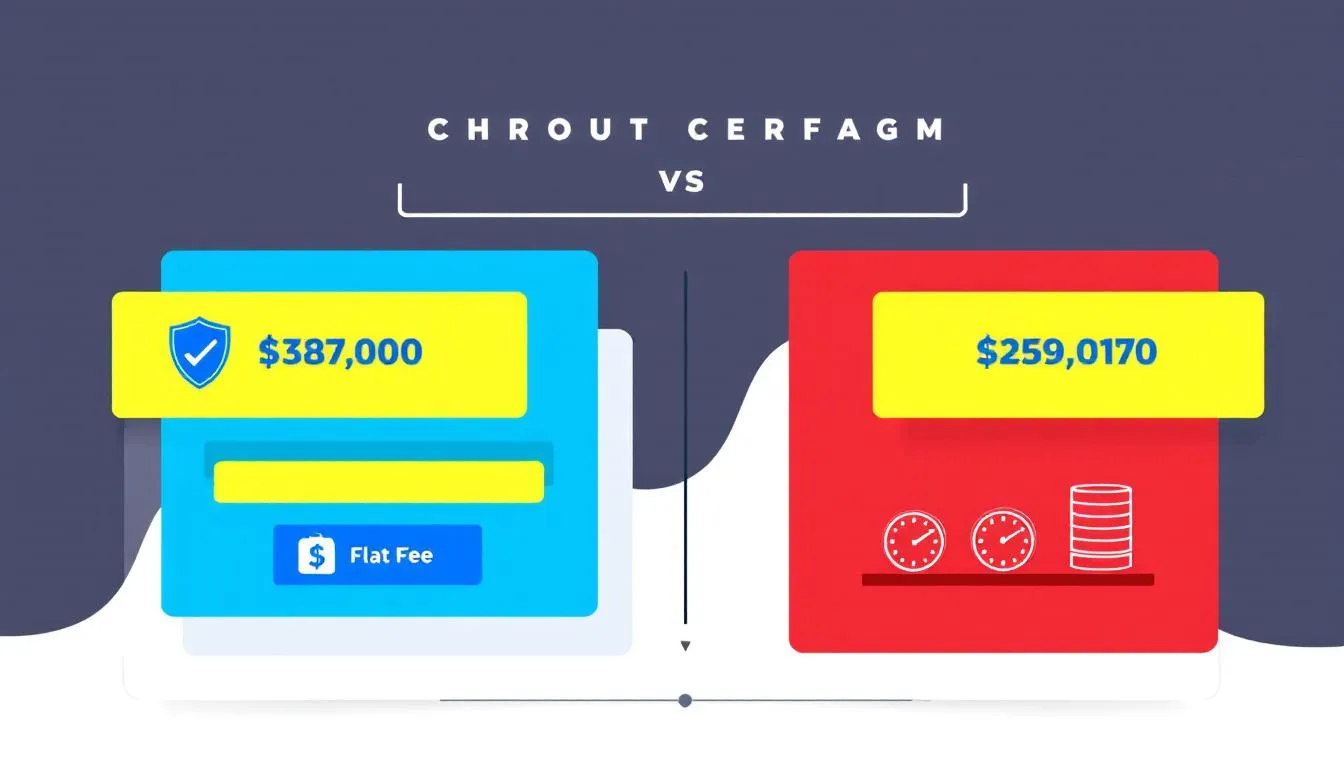
A hybrid billing method model, combining flat and hourly rates, offers flexibility and stability. This approach allows businesses to adapt their pricing method to fit specific job requirements, balancing fixed costs and variable pricing.
Market positioning relative to competitors is crucial for determining pricing strategy, ensuring the model aligns with business goals like growth, market penetration, or profitability. Using a hybrid model can help ensure profitability by matching the billing approach to the job’s complexity.
A well-structured billing system influences customer perception of value, impacting loyalty and satisfaction. Ensuring accurate pricing and comprehensive coverage can enhance customer trust and business growth.
Summary
In summary, choosing the right IT billing model is crucial for cost savings, predictable budgeting, and client satisfaction. The $100 IT issue fee offers simplicity and predictability, while traditional hourly billing provides flexibility for complex projects.
Ultimately, the best choice depends on your business needs, project complexity, and financial goals. By understanding the pros and cons of each model, you can make an informed decision that supports your business growth and client relationships.
Frequently Asked Questions
What is the $100 IT issue fee?
The $100 IT issue fee represents a fixed charge that businesses incur for each IT issue, providing predictability in costs regardless of resolution time. This model helps organizations manage their IT budgets effectively.
How does hourly IT billing work?
Hourly IT billing works by charging a predetermined rate for each hour of service provided, which usually falls between $75 and $200 based on the task’s complexity. This structured approach ensures transparency in costs for clients as they pay strictly for the time spent on their projects.
Which model is more cost-effective?
The flat rate pricing model is generally more cost-effective for businesses with frequent IT issues, while hourly billing may suit complex projects better. Ultimately, the choice should align with your specific IT needs and project complexity.
How does flat rate pricing affect client satisfaction?
Flat rate pricing significantly enhances client satisfaction by providing clear and predictable costs, which mitigates concerns about unexpected charges and fosters trust and loyalty.
Can businesses use a combination of both models?
Absolutely, businesses can effectively utilize a hybrid pricing model that merges flat and hourly rates, offering both flexibility and stability to accommodate varying job requirements. This approach enhances adaptability in pricing strategies, increasing the revenue potential for business.
Need Tech Help Now?
Get expert remote support for $100 per issue, no contracts and no hidden fees.
Schedule Your Session: https://bookings.direct-support.com/#/book or visit Direct-Support.com to get started.